Is At&T Internet 50 Mbps Suffient Enough To Download Netflix And Amazon? UPDATED
Is At&T Internet 50 Mbps Suffient Enough To Download Netflix And Amazon?
be
exist, live; accept place; happen; to belong; attend: I'll be at the concert.
Not to exist confused with:
bee – an insect, as a bumblebee or honeybee; a community social gathering: a sewing bee; a spelling bee
Abused, Confused, & Misused Words past Mary Embree Copyright © 2007, 2013 by Mary Embree
Be
BE
abbr.
1. Bachelor of Education
two. Bachelor of Engineering
3. barium enema
4. bill of exchange
5. Lath of Education
Bé
be
(bē)v. First and third person singular past indicative was (wŭz, wŏz; wəz when unstressed ) second person singular and plural and commencement and tertiary person plural past indicative were (wûr) past subjunctive were past participle been (bĭn) present participle be·ing (bē′ĭng) first person singular present indicative am (ăm) 2nd person singular and plural and first and third person plural present indicative are (är) third person atypical present indicative is (ĭz) nowadays subjunctive exist
five. intr.
1. To exist in actuality; have life or reality: I remember, therefore I am.
ii.
a. To occupy a specified position: The nutrient is on the table.
b. To remain in a sure state or situation undisturbed, untouched, or unmolested: Permit the children be.
3. To take identify; occur: The examination was yesterday.
iv. To go or come: Accept you ever been to Italian republic? Accept you been home recently?
5. Used as a copula in such senses as:
a. To equal in identity: "To be a Christian was to be a Roman" (James Bryce).
b. To take a specified significance: A is excellent, C is passing. Let n be the unknown quantity.
c. To belong to a specified grade or group: The human existence is a primate.
d. To accept or show a specified quality or feature: She is witty. All humans are mortal.
e. To seem to consist or be made of: The thousand is all snowfall. He is all bluff and no seize with teeth.
vi. To belong; befall: Peace exist unto y'all. Woe is me.
v. aux.
1. Used with the past participle of a transitive verb to form the passive vocalism: The mayoral election is held annually.
ii. Used with the present participle of a verb to express a continuing action: We are working to better housing conditions.
3. Used with the infinitive of a verb to limited intention, obligation, or hereafter activeness: She was to call before she left. You are to make the necessary changes.
4. Used with the by participle of certain intransitive verbs to form a perfect tense: Those days are gone. Permit me know when y'all are finished.
[Centre English
ben, from Old English
bēon; run into
bheuə-in the Appendix of Indo-European roots. See am, is, etc. for links to other Indo-European roots.]
Usage Note: Traditional grammer requires the subjective form of the pronoun in the predicate of the verb be: Information technology is I (not me), That must be they (not them), and and then along. The rule is based on the vague notion that the complement of be is being equated with the subject of the sentence so it should be treated similar the subject and have subjective case. This reasoning is faulty considering the grammatical example of a noun or pronoun is really determined by its position in the sentence, non by what it refers to, and in anything simply the most formal manner the complement of exist takes objective case: people say It'southward me, not It's I. Indeed, in breezy contexts the subjective pronoun tin can sound pretentious and even ridiculous, especially when the pronoun likewise functions equally the object of a verb or preposition in the relative clause, as in It isn't them/they that we accept in mind, where the third-person pronoun serves equally both the complement of is and the object of have. In our 2016 survey, 71 percent of the Usage Panel accepted It isn't them that we have in listen, while only 53 percent accepted It isn't they that we have in mind. Post-obit the traditional rule in such cases is more than of a stylistic preference than a grammatical imperative. Fortunately, writers who wish to avoid sounding stilted simply prefer not to violate the standard rule can unremarkably revise their sentences easily plenty: They are not the ones nosotros have in mind, Nosotros have someone else in mind, and so on. See Usage Notes at I1 , we.
Our Living Language In identify of the inflected forms of be, such as is and are, used in Standard English language, African American Colloquial English (AAVE) and some varieties of Southern American English may utilise zero copula, as in He working, or an invariant exist, every bit in He exist working, instead of the Standard English He is working. As an identifying characteristic of the vernacular of many African Americans, invariant be has been ofttimes seized on past writers and commentators trying to imitate or parody black voice communication. However, most imitators apply it simply as a substitute for is, as in John be sitting in that chair at present, without realizing that within AAVE, invariant be is used primarily for habitual or extended actions gear up in the present. Among African Americans the course is most commonly used by working-class speakers and young persons. Since the 1980s, younger speakers have tended to restrict the use of the form to progressive verb forms (as in He be walking), whereas their parents as well use it with adjectives (as in He be nice) and expressions referring to a location (as in He exist at home). Younger speakers also utilise invariant be more exclusively to indicate habitual action, whereas older speakers more commonly omit exist forms (as in He walking) or use present tense verb forms (such as He walks), sometimes with adverbs similar oftentimes or usually, to indicate habituality. · The source of invariant habitual be in AAVE is still disputed. Some linguists suggest that it represents influence from finite be in the 17th- to 19th-century English of British settlers, especially those from the southwest of England. Other linguists feel that contemporaneous Irish gaelic or Scotch-Irish gaelic immigrants may have played a larger role, since their dialects marker habitual verb forms with be and do be, as in "They be shooting and fishing out at the Forestry Lakes" (archival recordings of the Imperial Irish Academy) and "Up half the night he does be" (James Joyce). But some have argued that the evolution of invariant be in Irish English came subsequently its development in AAVE. Other linguists believe that habitual be in AAVE may take evolved from the habitual does be construction brought to America by Caribbean Creole slaves and migrants from the 17th century on; until very recently, the construction was still in utilise amidst Gullah speakers from littoral South Carolina and Georgia, where Barbadian and other Caribbean slaves had been well-represented in the founding populations. Nonetheless other linguists propose that invariant be is an innovation within AAVE arising in the second one-half of the 20th century, essentially a response to the broad range of meanings that the English progressive tense can express. See Notes at similar2 , naught copula.
American Heritage® Dictionary of the English Language, Fifth Edition. Copyright © 2016 by Houghton Mifflin Harcourt Publishing Visitor. Published by Houghton Mifflin Harcourt Publishing Company. All rights reserved.
be
(biː; unstressed bɪ)vb (intr) , pres. sing 1st pers am, second pers are, 3rd pers is, pres. pl are, past sing 1st pers was, 2nd pers were, 3rd pers was, by pl were, pres. part being, past part been
1. to have presence in the realm of perceived reality; exist; live: I think, therefore I am; not all that is can be understood.
ii. (used in the perfect or past perfect tenses simply) to pay a visit; get: have you been to Spain?.
3. to take place; occur: my birthday was last Thursday.
four. (copula) used as a linking verb between the subject of a sentence and its noun or adjective complement or complementing phrase. In this case be expresses the relationship of either essential or incidental equivalence or identity (John is a man; John is a musician) or specifies an essential or incidental attribute (honey is sweetness; Susan is angry). It is also used with an adverbial complement to signal a relationship of location in space or time (Neb is at the office; the trip the light fantastic toe is on Saturday)
5. (takes a nowadays participle) forms the progressive present tense: the man is running.
half dozen. (takes a past participle) forms the passive voice of all transitive verbs and (archaically) certain intransitive ones: a good moving-picture show is being shown on television tonight; I am done.
vii. (takes an infinitive) expresses intention, expectation, assumption, or obligation: the president is to make it at 9.30; you are not to leave before I say and so.
eight. (takes a past participle) forms the perfect or past perfect tense of certain intransitive verbs of motion, such as go or come: the last train is gone.
nine. be that every bit it may the facts apropos (something) are of no importance
[Sometime English language bēon; related to Erstwhile German language bim am, Latin fui I take been, Greek phuein to bring forth, Sanskrit bhavati he is]
be
the internet domain proper noun for
(Estimator Science) Belgium
Be
the chemic symbol for
(Elements & Compounds) glucinium
BE
abbreviation for
1. (Commerce) bill of exchange
2. (Instruction) (in the Us) Board of Education
iii. (Education) Bachelor of Education
4. (Educational activity) Bachelor of Engineering
Bé
abbreviation for
(Units) Baumé
Collins English Lexicon – Complete and Entire, twelfth Edition 2014 © HarperCollins Publishers 1991, 1994, 1998, 2000, 2003, 2006, 2007, 2009, 2011, 2014
be
(bi; unstressed bi, bɪ)v. and auxiliary v., pres. sing. 1st pers. am, 2nd are, 3rd is, pres. pl. are; past sing. 1st pers. was, 2nd were, third was, past pl. were; pres. subj. be; past subj. sing. 1st, 2d, and 3rd pers. were; past subj. pl. were; past part. been; pres. part. exist•ing. v.i.
i. to be or alive: Shakespeare's "To be or not to exist" is the ultimate question.
2. to take place; occur: The wedding was terminal calendar week.
3. to occupy a place or position: The volume is on the table.
4. to continue or remain equally before: Permit things exist.
5. to vest; nourish; befall: May proficient fortune be with y'all.
vi. (used equally a copula to connect the subject area with its predicate adjective, or predicate nominative, in guild to depict, identify, or amplify the subject): He is tall. She is president.
seven. (used as a copula to introduce or form interrogative or imperative sentences): Is that right? Exist quiet!
auxiliary verb.eight. (used with the present participle of another verb to course progressive tenses): I am waiting. We were talking.
9. (used with the infinitive of the chief verb to indicate a command, arrangements, or hereafter activity): He is to see me today. You are non to get out before half-dozen.
10. (used with the past participle of some other verb to class the passive voice): The date was stock-still.
11. (used in archaic or literary constructions with some intransitive verbs to form perfect tenses): He is come.
[earlier 900; Middle English; Old English bēon; akin to Old Frisian, Old High German language bim (I) am, Latin fuī (I) have been, Greek phýein to grow, become]
usage: Meet me.
Be
Chem. Symbol.
glucinium.
be-
a prefix with the original sense "about," "around," "all over," hence having an intensive and often disparaging forcefulness; used every bit a verb formative (becloud; besiege), and often serving to form transitive verbs from intransitives or from nouns: belabor; befriend; belittle.
[Middle English, Former English, unstressed form of bī by1]
B.E.
1. Bachelor of Instruction.
2. Bachelor of Engineering science.
Random House Kernerman Webster's College Dictionary, © 2010 K Dictionaries Ltd. Copyright 2005, 1997, 1991 by Random Business firm, Inc. All rights reserved.
Be
The symbol for glucinium.
The American Heritage® Student Scientific discipline Lexicon, Second Edition. Copyright © 2014 by Houghton Mifflin Harcourt Publishing Company. Published by Houghton Mifflin Harcourt Publishing Company. All rights reserved.
be
1. forms
Be is the almost common verb in English. It is used in many different ways.
The nowadays tense forms of be are am, are, and is, and the by tense forms are was and were. Exist is both an auxiliary and a main verb.
...a trouble which is getting worse.
Information technology was almost four o'clock.
Am, is, and are are not usually pronounced in total. When you lot write downwards what someone says, you usually stand for am and is using 'm and 'due south.
'I'm distressing,' I said.
'Merely information technology's not possible,' Lili said.
'Okay,' he said. 'Your brother's going to take y'all to Grafton.'
You can likewise correspond are using 're, merely simply later on a pronoun.
'Nosotros're winning,' he said.
You can also utilize the forms 'm, 's and 're when you are writing in a conversational style.
2. used every bit an auxiliary
Be is an auxiliary when forming continuous tenses and passives.
She was watching us.
Several apartment buildings were destroyed.
In conversation, go is often used to grade passives.
3. used as a primary verb
You use be as a main verb when y'all are describing things or people or giving information nigh them. Later be, you apply a complement. A complement is either an describing word or a noun grouping.
We were very happy.
He is at present a teenager.
4. indicating someone's job
When be is followed by a noun grouping indicating a unique job or position inside an organization, you do not have to put 'the' in front of the substantive.
At one time you wanted to be President.
Be Conscientious!
Brand is sometimes used instead of 'exist' to say how successful someone is in a item chore or office. For example, instead of saying 'He will be a adept president', you can say 'He will make a good president'.
5. indicating age and cost
Y'all tin can talk well-nigh a person's age by using exist followed past a number.
Rose Gibson is twenty-vii.
You can likewise use exist to say how much something costs.
How much is it?
Information technology's five pounds.
half-dozen. with prepositional phrases
Y'all can utilise many kinds of prepositional phrase after be.
He was even so in a land of stupor.
I'm from Dortmund originally.
...people who are under pressure.
vii. with to-infinitives
Yous sometimes use to-infinitive clauses later on be.
The talks are to begin tomorrow.
What is to exist done?
8. in questions and negative clauses
When y'all use be as a master verb in questions and negative clauses, you do not use the auxiliary 'do'.
Are yous OK?
Is she Rick's sis?
I was non surprised.
Information technology was not an piece of cake task.
9. in continuous tenses
Exist is non normally a main verb in continuous tenses. However, y'all can use it in continuous tenses to draw someone'south behaviour at a detail time.
Y'all're being very empty-headed.
x. 'be' and 'become'
Do not confuse exist with go. Be is used to bespeak that someone or something has a particular quality or nature, or is in a detail situation. Become is used to indicate that someone or something changes in some mode.
Before he became Mayor he had been a tram driver.
It was not until 1845 that Texas became function of the United states of americaA.
11. after 'in that location'
Be is oftentimes used later on in that location to point the existence or occurrence of something.
Clearly there is a problem here.
In that location are very few cars on this street.
There was zero new in the letter.
Be Careful!
You cannot use exist without there to indicate that something exists or happens. You cannot say, for example, 'Another explanation is' or 'Some other explanation must be'. You must say 'There is another caption' or 'In that location must be some other explanation'.
12. after 'information technology'
Exist is often used afterwards information technology to describe something such as an experience, or to comment on a situation.
It was very quiet in the hut.
Information technology was awkward keeping my news from Ted.
It's foreign y'all should come up today.
thirteen. 'have been'
If y'all accept visited a place and accept at present come back from it, British speakers say that you accept been there.
I have been to Santander many times.
Collins COBUILD English Usage © HarperCollins Publishers 1992, 2004, 2011, 2012
be
Past participle: been
Gerund: existence
| Imperative |
|---|
| be |
| exist |
Collins English language Verb Tables © HarperCollins Publishers 2011
Thesaurus Antonyms Related Words Synonyms Legend:
| Noun | 1. | 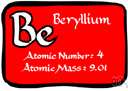 Be - a light stiff brittle grey toxic bivalent metallic chemical element Be - a light stiff brittle grey toxic bivalent metallic chemical elementatomic number 4, beryllium, glucinium metal, metallic element - any of several chemic elements that are usually shiny solids that bear oestrus or electricity and tin can be formed into sheets etc. beryl - the chief source of glucinium; colored transparent varieties are valued as gems chrysoberyl - a rare hard xanthous greenish mineral consisting of beryllium aluminate in crystal form; used as a gemstone gadolinite, ytterbite - a mineral that is a source of rare earths; consists of silicates of iron and beryllium and cerium and yttrium and erbium |
| Verb | 1. | exist - have the quality of being; (copula, used with an describing word or a predicate noun); "John is rich"; "This is not a good respond" look - have a certain outward or facial expression; "How does she look?"; "The child looks unhappy"; "She looked pale after the surgery" suffer, injure - experience pain or be in hurting exist well - exist good for you; feel good; "She has not been well lately" suffer - feel unwell or uncomfortable; "She is suffering from the hot weather" feel - be conscious of a concrete, mental, or emotional state; "My common cold is gone--I feel fine today"; "She felt tired after the long hike"; "She felt pitiful after her loss" remain, stay, remainder - stay the same; remain in a sure land; "The dress remained wet after repeated attempts to dry it"; "residual assured"; "stay alone"; "He remained unmoved by her tears"; "The bad atmospheric condition connected for some other calendar week" keep - exist over a prolonged flow of fourth dimension; "The bad conditions continued for ii more weeks" coruscate, sparkle, scintillate - be lively or brilliant or showroom virtuosity; "The musical functioning sparkled"; "A scintillating conversation"; "his playing coruscated throughout the concert hall" befuddle, confound, confuse, discombobulate, fox, bedevil, fuddle, throw - be confusing or perplexing to; cause to be unable to think clearly; "These questions confuse fifty-fifty the experts"; "This question completely threw me"; "This question befuddled even the teacher" rank - take or have a position relative to others; "This painting ranks amidst the best in the Western World" point - exist positionable in a specified fashion; "The gun points with ease" demand, want, require - accept need of; "This pianoforte wants the attending of a competent tuner" compact, pack - have the property of being packable or of compacting easily; "This pulverization compacts easily"; "Such odd-shaped items do not pack well" rest - non move; exist in a resting position cutting - allow incision or separation; "This bread cuts easily" seethe - be in an agitated emotional state; "The customer was seething with anger" moon about, moon effectually, mope - be apathetic, gloomy, or mazed announced, seem, await - give a sure impression or accept a certain outward attribute; "She seems to be sleeping"; "This appears to be a very difficult problem"; "This project looks fishy"; "They appeared like people who had not eaten or slept for a long time" seem, appear - seem to be true, probable, or credible; "Information technology seems that he is very gifted"; "Information technology appears that the weather in California is very bad" owe - be in debt; "She owes me $200"; "I still owe for the auto"; "The thesis owes much to his adviser" belong - be owned by; be in the possession of; "This book belongs to me" cover - be sufficient to come across, defray, or offset the charge or cost of; "Is this enough to cover the cheque?" represent - be representative or typical for; "This menstruum is represented by Beethoven" account - be the sole or primary factor in the being, acquisition, supply, or disposal of something; "Passing grades account for one-half of the grades given in this exam" cut beyond - be contrary to ordinary procedure or limitations; "Opinions on bombing the Serbs cutting across party lines" begin, start - take a beginning characterized in some specified way; "The novel begins with a murder"; "My property begins with the three maple copse"; "Her 24-hour interval begins with a conditioning"; "The semester begins with a convocation anniversary" begin - have a beginning, of a temporal event; "WW Ii began in 1939 when Hitler marched into Poland"; "The company's Asia tour begins side by side month" stand - be in some specified state or condition; "I stand corrected" define, delimit, delimitate, delineate, specify - determine the essential quality of become - be or go along to be in a sure condition; "The children went hungry that day" make sense, add up - be reasonable or logical or comprehensible incorporate, consist - exist composed of; "The land he conquered comprised several provinces"; "What does this dish consist of?" prove, plow out, turn upwards - exist shown or exist constitute to be; "She proved to be correct"; "The medicine turned out to salve her life"; "She turned up HIV positive" account for - be the reason or explanation for; "The recession accounts for the ho-hum retail business" remain - be left; of persons, questions, problems, results, evidence, etc.; "There remains the question of who pulled the trigger"; "Carter remains the merely President in contempo history under whose Presidency the U.Southward. did non fight a war" stick past, stand by, adhere, stick - exist loyal to; "She stood past her husband in times of trouble"; "The friends stuck together through the war" footle, hang around, lallygag, loiter, lollygag, mess well-nigh, mill well-nigh, manufactory around, tarry, lounge, lurk, linger, loaf - exist near; "The high schoolhouse students like to loiter in the Primal Square"; "Who is this man that is hanging around the department?" |
| 2. | be - exist identical to; be someone or something; "The president of the visitor is John Smith"; "This is my firm" | |
| three. | be - occupy a certain position or surface area; exist somewhere; "Where is my umbrella?" "The toolshed is in the back"; "What is backside this behavior?" stretch, stretch along - occupy a large, elongated area; "The park stretched beneath the train line" nourish, get to - be present at (meetings, church services, university), etc.; "She attends class regularly"; "I rarely nourish services at my church"; "did you go to the meeting?" fill, occupy - occupy the whole of; "The liquid fills the container" inhabit, live, populate, dwell - inhabit or live in; be an inhabitant of; "People lived in Africa millions of years ago"; "The people inhabited the islands that are at present deserted"; "this kind of fish dwells near the bottom of the bounding main"; "deer are populating the wood" inhabit - be present in; "sweet memories inhabit this firm" go along ane's altitude, keep 1'southward optics off, keep one'southward hands off, stand back, stay away - stay clear of, avoid; "Go along your hands off my wife!"; "Keep your distance from this man--he is unsafe" extend to, reach, touch on - to extend as far equally; "The sunlight reached the wall"; "Can he achieve?" "The chair must not impact the wall" extend, run, atomic number 82, pass, become - stretch out over a distance, infinite, time, or scope; run or extend between two points or beyond a certain point; "Service runs all the way to Cranbury"; "His noesis doesn't go very far"; "My memory extends back to my 4th year of life"; "The facts extend beyond a consideration of her personal avails" lead, become - lead, extend, or afford access; "This door goes to the basement"; "The road runs South" encompass, extend, continue - span an interval of distance, space or time; "The war extended over five years"; "The period covered the plow of the century"; "My land extends over the hills on the horizon"; "This farm covers some 200 acres"; "The Archipelago continues for some other 500 miles" poke out, attain out, extend - reach outward in infinite; "The canopy extends several feet over the sidewalk" lie - be located or situated somewhere; occupy a certain position sit - be located or situated somewhere; "The White House sits on Pennsylvania Artery" sit around, sit - exist around, often idly or without specific purpose; "The object saturday in the corner"; "We sat around chatting for another hour" face - be opposite; "the facing page"; "the ii sofas face each other" straddle - sit or stand astride of follow - be next; "Mary plays best, with John and Sue post-obit" center on - have every bit a eye; "The region centers on Charleston" rest, prevarication - have a place in relation to something else; "The fate of Bosnia lies in the hands of the West"; "The responsibleness rests with the Allies" vest, go - exist in the right place or state of affairs; "Where do these books vest?"; "Let's put health care where information technology belongs--under the control of the government"; "Where do these books go?" come - be or occur in a certain point in a series; "Next came the student from France" | |
| four. | be - have an existence, be extant; "Is there a God?" exist come up - be found or available; "These shoes come in three colors; The furniture comes unassembled" preexist - exist beforehand or prior to a certain point in time; "Did this condition pre-be?" kicking virtually, kicking around, knock about - exist effectually; exist alive or active; "Does the old homo still boot around?" coexist - exist together indwell - to exist as an inner activating spirit, force, or principle prevail, obtain, concur - exist valid, applicable, or true; "This theory however holds" consist, lie in, dwell, lie - originate (in); "The problems dwell in the social injustices in this land" endanger, imperil, jeopardise, jeopardize, menace, peril, threaten - pose a threat to; present a danger to; "The pollution is endangering the crops" flow - be abundantly present; "The champagne flowed at the wedding" distribute - exist distributed or spread, as in statistical analyses; "Values distribute" inhabit, dwell - exist or exist situated within; "Foreign notions inhabited her mind" | |
| v. | be - happen, occur, take place; "I lost my wallet; this was during the visit to my parents' business firm"; "There were two hundred people at his funeral"; "In that location was a lot of noise in the kitchen" | |
| 6. |  be - be identical or equivalent to; "One dollar equals 1,000 rubles these days!" be - be identical or equivalent to; "One dollar equals 1,000 rubles these days!"equal stand for, equate - be equivalent or parallel, in mathematics correspond, gibe, jibe, match, tally, concur, fit, cheque - exist compatible, similar or consistent; coincide in their characteristics; "The 2 stories don't hold in many details"; "The handwriting checks with the signature on the bank check"; "The doubtable'south fingerprints don't lucifer those on the gun" correspond, correspond, represent - take the place of or exist parallel or equivalent to; "Considering of the sound changes in the course of history, an 'h' in Greek stands for an 's' in Latin" translate - exist equivalent in result; "the growth in income translates into greater purchasing power" | |
| 7. | exist - form or compose; "This money is my just income"; "The stone wall was the backdrop for the performance"; "These institute my entire belonging"; "The children made upwardly the chorus"; "This sum represents my entire income for a year"; "These few men comprise his entire army" constitute, brand up, comprise, represent brand - constitute the essence of; "Clothes make the man" compose - form the substance of; "Greed and ambition composed his personality" form, constitute, make - to compose or stand for:"This wall forms the background of the stage setting"; "The branches fabricated a roof"; "This makes a fine introduction" straddle, range - range or extend over; occupy a certain area; "The plants straddle the unabridged state" fall into, autumn under - be included in or classified every bit; "This falls under the rubric 'diverse'" pose, nowadays - introduce; "This poses an interesting question" supplement - serve as a supplement to; "Vitamins supplemented his meager nutrition" | |
| viii. | exist - work in a specific place, with a specific subject, or in a specific role; "He is a herpetologist"; "She is our resident philosopher" follow vet - work as a veterinarian; "She vetted for the farms in the area for many years" cox - human action equally the coxswain, in a boat race | |
| 9. |  be - represent, every bit of a character on stage; "Derek Jacobi was Hamlet" be - represent, every bit of a character on stage; "Derek Jacobi was Hamlet"embody, personify stand for, symbolize, typify, symbolise, stand for - express indirectly past an image, form, or model; be a symbol; "What does the Statue of Liberty symbolize?" body, personify - invest with or as with a trunk; give trunk to exemplify, represent - be feature of; "This compositional style is exemplified past this fugue" | |
| ten. |  be - spend or utilise fourth dimension; "I may be an hr" be - spend or utilise fourth dimension; "I may be an hr"take, apply up, occupy - require (time or space); "It took three hours to get to work this morning"; "This event occupied a very short time" | |
| 11. | exist - have life, exist alive; "Our great leader is no more than"; "My grandpa lived until the end of war" alive live on, survive, concluding, live, endure, concur out, concord up, get - keep to alive through hardship or arduousness; "Nosotros went without water and nutrient for 3 days"; "These superstitions survive in the backwaters of America"; "The race car driver lived through several very serious accidents"; "how long tin can a person concluding without food and water?" | |
| 12. | exist - to remain unmolested, undisturbed, or uninterrupted -- used only in infinitive form; "let her be" remain, stay, residue - stay the same; remain in a sure state; "The dress remained wet after repeated attempts to dry it"; "rest assured"; "stay lone"; "He remained unmoved by her tears"; "The bad atmospheric condition continued for another week" | |
| 13. |  be - be priced at; "These shoes cost $100" be - be priced at; "These shoes cost $100"cost be - have the quality of being; (copula, used with an adjective or a predicate noun); "John is rich"; "This is not a adept respond" knock back, put back, set back - cost a sure amount; "My daughter's wedding prepare me back $20,000" |
Based on WordNet iii.0, Farlex clipart collection. © 2003-2012 Princeton Academy, Farlex Inc.
be
verb
1. exist, exist nowadays, exist extant There are ii kinds of company pension.
two. be alive, live, exist, survive, breathe, last, exist nowadays, go on, endure, be living, be extant, happen It hurt so badly he wished to cease to exist.
v. be situated, be set, be placed, be located, be installed, be positioned The church is on the other side of the town.
7. price, come to, sell at, gear up (someone) back (informal), command a price of How much is this?
Collins Thesaurus of the English Language – Complete and Entire 2nd Edition. 2002 © HarperCollins Publishers 1995, 2002
be
verbi. To take reality or life:
two. To take being or actuality:
The American Heritage® Roget'southward Thesaurus. Copyright © 2013, 2014 past Houghton Mifflin Harcourt Publishing Visitor. Published by Houghton Mifflin Harcourt Publishing Company. All rights reserved.
Translations
يُسْتَعْمَل لِبِناء فِعْل المُسْتَقْبَل يُسْتَعْمَل لِطَلَب مَعْلوماتيَكُونُيَكْون
být mít muset být starý být v nepoměru
være blive blive halvgammel finde sted i proportion
egali ekzisti esti iĝi okazi
olema
olla tulla
biti nalaziti se
lenni van
vera vera í ósamræmi/hlutfallslega rangur eiga; mun eldast, verîa gamall ná/vera í réttu hlutfalli
・・・がある いる 在る 存在する 居る
(…) 이다 있다
natus sum venio
būti būtybė egzistavimas lemta būti pagrindinis ir vienintelis tikslas
būt inženierzinatnu bakalaurs
egala exista fi
byť 5 nepomere
biti
vara vara lika med bli existera finnas
เป็น อยู่ คือ
là ở
Exist
Due north ABBR (Fin) =neb of exchange → L/C
be
[biː] (am, is, are (present) (was, were (pt)) (been (pp)))
A. INTRANSITIVE VERB
ane. (linking nouns, noun phrases, pronouns) → ser
he's a pianist → es pianista
he wants to be a doctor → quiere ser médico
Monday's a holiday → el lunes es fiesta
two and two are four → dos y dos son cuatro
it'due south me! → ¡soy yo!
it was me → fui yo
who wants to be Hamlet? → ¿quién quiere hacer de or ser Hamlet?
you be the patient and I'll be the doctor → tú eres el enfermo y yo seré el médico
if I were y'all → yo en tu lugar ..., yo que tú ...
2. (possession) → ser
she'southward his sis → es su hermana
information technology'due south mine → es mío
three. (characteristics seen equally inherent) → ser
the heaven is blue → el cielo es azul
it'southward (made of) plastic → es de plástico
they're English language → son ingleses
he's tall → es alto
information technology'southward round/enormous → es redondo/enorme
she is boring → es aburrida
I used to be poor but now I'm rich → antes era pobre pero ahora soy rico
if I were rich → si fuera rico
I'k from the south → soy del sur
the book is in French → el libro es en francés
Apply
estarwith past participles used equally adjectives describing the results of an activeness or process:
it's broken → está roto
he'due south expressionless → está muerto
5. (historic period) "how old is she?" - "she'southward 9" → -¿cuántos años tiene? -tiene nueve años
she will be two tomorrow → mañana cumple dos años
when I'm old → cuando body of water viejo
when I was immature → cuando era joven
6. (= take place) → ser
the meeting'south today → la reunión es hoy
the service will be at St Ninian's Church → el oficio será en la iglesia de San Ninian
8. (impersonal use)
8.3. (asking and giving opinion) → ser
is it sure that ...? → ¿es verdad or cierto que ...?
it is piece of cake to make a mistake → es fácil cometer united nations fallo
is it fair that she should be punished while ...? → ¿es justo que se la castigue mientras que ...?
it is possible that he'll come up → es posible que venga, puede (ser) que venga
information technology is incommunicable to study all the time → es imposible estar siempre estudiando
it is unbelievable that → es increíble que ...
BUT it's non clear
... → no está claro si ...
information technology would be incorrect for u.s.a. to do that → no estaría bien que nosotros hiciésemos eso
8.iv. (emphatic) → ser
it's me who does all the piece of work → soy yo quien hace todo el trabajo
it was Peter who phoned → fue Peter quien llamó
why is it that she'south and so successful? → ¿cómo es que tiene tanto éxito?, ¿por qué tiene tanto éxito?
information technology was then that → fue entonces cuando ...
nine. (= be) → haber
there is/are → hay
what is (there) in that room? → ¿qué hay en esa habitación?
there is nothing more beautiful → no hay naught más bello
is there anyone at home? → ¿hay alguien en casa?
there were six road accidents here concluding year → el año pasado hubo seis accidentes de tráfico aquí
there must be an explanation → debe de haber una explicación
in that location being no alternative solution → al no haber or no habiendo otra solución ...
let there be light! → ¡hágase la luz!
BUT there are three of united states of america → somos tres
in that location were three of them → eran tres
afterward the shop in that location's the omnibus station → después de la tienda está la estación de autobuses THERE
xi. (= visit) has the postman been? → ¿ha venido el cartero?
he has been and gone → vino y se fue
I take been to see my aunt → he ido a ver a mi tía
take you ever been to Glasgow? → ¿has estado en Glasgow alguna vez?
I've been to Prc → he estado en Mainland china
13. (in set expressions) to be or not to exist → ser o no ser
been and you've been and washed information technology now! → ¡buena la has hecho!
that dog of yours has been and dug upwardly my flowers! → ¡tu perro ha ido y me ha destrozado las flores!
you're decorated enough as it is → estás bastante ocupado ya con lo que tienes, ya tienes suficiente trabajo
as things are → tal como están las cosas
be that equally it may → ocean como fuere
if information technology hadn't been for if it hadn't been for yous or > had it non been for you, we would have lost (frm) → si no hubiera sido por ti or de no haber sido por ti, habríamos perdido
let me be! → ¡déjame en paz!
if that'due south what you lot desire to exercise, and then so be information technology → si eso es lo que quieres hacer, adelante
what is it to you? → ¿a ti qué te importa?
what'due south it to exist? (in bar etc) → ¿qué va a ser?, ¿qué vas a tomar?
B. AUXILIARY VERB
2. (forming continuous) → estar
information technology's raining → está lloviendo
what are you doing? → ¿qué estás haciendo?, ¿qué haces?
don't distract me when I'yard driving → no me distraigas cuando estoy conduciendo
he'southward e'er grumbling → siempre está quejándose
he was studying until the early hours → estuvo estudiando hasta la madrugada
Use the present unproblematic to talk about planned future events and the ir a construction to talk about intention:
they're coming tomorrow → vienen mañana
"it's a pity y'all aren't coming with usa" - "but I am coming!" → -¡qué pena que no vengas con nosotros! -¡sí que voy!
will you exist seeing her tomorrow? → ¿la verás or la vas a ver mañana?
will you lot be needing more? → ¿vas a necesitar más?
I shall be seeing him → voy a verlo
I'll be seeing yous → hasta luego, nos vemos (esp LAm)
The imperfect tense tin can be used for continuous action in the by:
he was driving besides fast → conducía demasiado rápido
see besides for, since
3. (verb substitute)
iii.1. he's older than you lot are → es mayor que tú
he isn't as happy equally he was → no está tan contento como antes
"he's going to complain about you" - "oh, is he?" → -va a quejarse de ti -¿ah, sí?
"I'm worried" - "so am I" → -estoy preocupado -yo también
"I'grand not gear up" - "neither am I" → -no estoy listo -yo tampoco
"you're tired" - "no, I'm not" → -estás cansado -no, ¡qué va!
"you're not eating enough" - "yep I am" → -no comes lo suficiente -que sí
"they're getting married" - "oh, are they?" (showing surprise) → -se casan -¿ah, sí? or -¡no me digas!
"he isn't very happy" - "oh, isn't he?" → -no está muy contento -¿ah, no?
"he'south ever belatedly, isn't he?" - "yeah, he is" → -siempre llega tarde, ¿verdad? -(pues) sí
"is it what you expected?" - "no, information technology isn't" → -¿es esto lo que esperabas? -(pues) no
"she's pretty" - "no, she isn't" → -es guapa -¡qué va!
3.two. (in question tags) he's handsome, isn't he? → es guapo, ¿verdad?, es guapo, ¿no?, es guapo, ¿no es cierto?
it was fun, wasn't it? → fue divertido, ¿verdad?, fue divertido, ¿no?
she wasn't happy, was she? → no era feliz, ¿verdad?
and so he's back again, is he? → así que ha vuelto, ¿eh?
you're not ill, are y'all? → ¿no estarás enfermo?
C. MODAL VERB (with infinitive construction)
1. (= must, have to) yous're to put on your shoes → tienes que ponerte los zapatos
he's non to open it → no debe abrirlo, que no lo abra
I am to do it → he de hacerlo yo → soy yo el que debe hacerlo
I am not to speak to him → no tengo permiso para hablar con él
I wasn't to tell you his proper name → no podía or debía decirte su nombre
2. (= should) → deber
he is to be congratulated on his work → debemos felicitarlo por su trabajo
am I to empathise that ...? → ¿debo entender que ...?
she wrote "My Life", not to be confused with Bernstein'due south book of the same proper noun → escribió "Mi Vida", que no debe confundirse con la obra de Bernstein que lleva el mismo título
he was to have come yesterday → tenía que or debía haber venido ayer
he is to be pitied → es digno de lástima
4. (= tin) these birds are to be found all over the world → estos pájaros se encuentran por todo el mundo
little traffic was to exist seen → había poco tráfico
yous weren't to know → no tenías por qué saberlo
5. (expressing destiny) this was to have serious repercussions → esto iba a tener serias repercusiones
they were never to return → jamás regresaron
information technology was not to exist → no quiso el destino que así fuera
6. (in conditional sentences) you must piece of work harder if yous are to succeed → debes esforzarte más si quieres triunfar
if it was or were to snowfall → si nevase or nevara ...
if I were to get out the job, would you replace me? → si yo dejara el puesto, ¿me sustituirías?
BE
"Ser" or "estar"?
You can use "ser":
• when defining or identifying by linking two nouns or noun phrases:
Paris is the uppercase of France París es la capital de Francia He was the nearly hated homo in the hamlet Era el hombre más odiado del pueblo
• to draw essential or inherent characteristics (e.one thousand. colour, material, nationality, race, shape, size ):
His female parent is German Su madre es alemana She was blonde Era rubia
• with most impersonal expressions not involving past participles:
It is important to be on fourth dimension Es importante llegar a tiempo
NOTE Está claro que is an exception:
It is obvious you don't empathize Está claro que no lo entiendes
• when telling the time or talking about fourth dimension or age:
Information technology is 10 o'clock Son las diez Information technology'due south very late. Let's go domicile Es muy tarde. Vamos a casa He lived in the country when he was young Vivió en el campo cuando era joven
• to signal possession or duty:
It'south mine Es mío This is your responsibility Este asunto es responsabilidad tuya
• with events in the sense of "take place":
The 1992 Olympic Games were in Barcelona Los Juegos Olímpicos de 1992 fueron en Barcelona "Where is the examination?" - "It'south in Room i" "¿Dónde es el examen?" - "Es en el Aula Número i"
! Compare this usage with that of estar (run into below) to talk nigh location of places, objects and people.
Y'all can apply "estar":
• to talk almost location of places, objects and people:
"Where is Zaragoza?" - "It's in Spain" "¿Dónde está Zaragoza?" - "Está en España" Your glasses are on the bedside table Tus gafas están en la mesilla de noche
! But employ ser with events in the sense of "accept place" (run across above).
• to talk about child-bearing state, status or mood:
The teacher is ill La profesora está enferma The coffee's common cold El café está frío How happy I am! ¡Qué contento estoy!
! Feliz, notwithstanding, which is seen as more permanent than contento, is used mainly with ser.
• to form progressive tenses:
We're having tiffin. Is it ok if I call you afterward? Estamos comiendo. Te llamaré luego, ¿vale?
Both "ser" and "estar" tin exist used with past participles
• Apply ser in passive constructions:
This play was written past Lorca Esta obra fue escrita por Lorca He was shot expressionless (by a terrorist group) Fue asesinado a tiros (por united nations grupo terrorista)
! The passive is not used as often in Spanish as it is in English.
• Employ estar with past participles to describe the results of a previous activeness or result:
We threw them away because they were cleaved Los tiramos a la basura porque estaban rotos He's dead Está muerto
• Compare the apply of ser + ((PAST PARTICIPLE)) which describes activity and estar + ((By PARTICIPLE)) which describes result in the following:
The window was cleaved by the firemen La ventana fue rota por los bomberos The window was broken La ventana estaba rota It was painted around 1925 Fue pintado hacia 1925 The floor is painted a dark colour El suelo está pintado de color oscuro
•Ser and estar are both used in impersonal expressions with past participles. As above, the use of ser implies action while the use of estar implies upshot:
It is understood that the piece of work was never finished Es sabido que el trabajo nunca se llegó a terminar It is a proven fact that vaccinations save many lives Está demostrado que las vacunas salvan muchas vidas
"Ser" and "estar" with adjectives
• Some adjectives can exist used with both ser and estar but the meaning changes completely depending on the verb:
Es listo He'south clever ¿Estás listo? Are you fix? La química es aburrida Chemical science is dull Estoy aburrido I'grand bored
• Other adjectives tin can also be used with both verbs simply the utilise of ser describes a characteristic while the utilise of estar implies a modify:
Es muy guapo He'due south very handsome Estás muy guapa con ese vestido You look great in that dress! Es delgado He'due south slim ¡Estás muy delgada! Yous're (looking) very slim
Collins Castilian Dictionary - Complete and Unabridged eighth Edition 2005 © William Collins Sons & Co. Ltd. 1971, 1988 © HarperCollins Publishers 1992, 1993, 1996, 1997, 2000, 2003, 2005
be
[ˈbiː] (STRONG) [bi] [was, were] (pt) [been] (pp)
aux vb
(with present participle, forming continuous tenses)
What are you doing? → Que faites-vous?
They're coming tomorrow → Ils viennent demain.
I've been waiting for yous for 2 hours → Je t'attends depuis 2 heures.
(with past participle, forming passives) → être
to be killed → être tué(e)
He was nowhere to be seen → On ne le voyait nulle part.
(in tag questions)
It was funny, wasn't information technology? → C'était drôle, n'est-ce pas?
She'south not coming, is she? → Elle ne vient pas, c'est ça?
(+to +infinitive)
The house is to be sold → La maison doit être vendue.
He's non to open it → Il ne doit pas fifty'ouvrir.
He was to have come yesterday → Il devait venir hier.
am I to understand that ... ? → dois-je comprendre que ... ?
(possibility, supposition) if I were you, I ... → à votre place, je ..., si j'étais vous, je ...
if it wasn't for you ... → sans vous, ...
copulative vb
(gen) → être
I'thousand English language → Je suis anglais(e).
I'm tired → Je suis fatigué(e).
Yous're late → Tu es en retard.
We are all happy → Nous sommes tous heureux.
They are in Paris at the moment → Ils sont à Paris en ce moment.
She'south a doc → Elle est médecin.
He's a student → Il est étudiant.
I'm cold
Only J'ai froid.
I'm hungry
BUT J'ai faim.
(= total) 2 and two are 4 → ii et 2 font 4
(when speaking of wellness) → aller
How are you? → Comment allez-vous?
He'south fine now → Il va bien maintenant.
He's very sick
Merely Il est très malade.
I've been sick
BUT J'ai été malade.
to exist not o.south.
He's not himself → Il north'est vraiment pas en forme.
(when speaking of historic period) → avoir
How old are you lot? → Quel âge equally-tu?, Quel âge avez-vous?
I'thousand fourteen → J'ai quatorze ans.
I'm sixteen years old → J'ai seize ans.
(= cost) → coûter
How much was the meal? → Combien a coûté le repas?
That'll be £five, delight
Simply Ça fera 5 livres, s'il vous plaît.
impers vb
(referring to time, distance) → être
information technology's 5 o'clock → il est 5 heures
it'due south the 28th of Apr → c'est le 28 avril
It's the 28th of October today
Simply Nous sommes le vingt-huit octobre.
it's 10 km to the village → le hamlet est à 10 km
(emphatic) it's me → c'est moi
It'due south the postman → C'est le facteur.
Collins English language/French Electronic Resource. © HarperCollins Publishers 2005
be
pres <am, is, are>, pret <was, were>, ptp <been>
COPULATIVE VERB
with adjective, substantive, pronoun → sein; to be critical of → kritisch sein or sich kritisch äußern über (+acc); exist sensible! → sei vernünftig; who'due south that? — it's me/that'due south Mary → wer ist das? — ich bins/das ist Mary; if I were you → wenn ich Sie or an Ihrer Stelle wäre; he is a soldier/a German → er ist Soldat/Deutscher; he wants to be a doctor → er möchte Arzt werden
Note that the article is used in German just when the noun is qualified by an adjective.
he'south a skilful student/a truthful Englishman → er ist ein guter Pupil/ein echter Engländer
referring to physical, mental state how are you lot? → wie gehts?; I'm better now → es geht mir jetzt besser; she's not at all well → es geht ihr gar nicht gut; to be hungry/thirsty → Hunger/Durst haben, hungrig/durstig sein; I am hot/cold/frozen → mir ist heiß/kalt/eiskalt; they were horrified → sie waren entsetzt
age → sein; he's v → er ist fünf; how old is she? → wie alt ist sie?; he'll exist three next month → er wird nächsten Monat drei (Jahre alt)
= cost → kosten; how much is that? → wie viel or was kostet das?
Math → sein; ii times two is or are four → zwei mal zwei ist or sind or gibt vier
in exclamations was he pleased to hear it! → er state of war vielleicht froh, das zu hören!; but wasn't she glad when … → lid sie sich vielleicht gefreut, als …
Brit inf how are y'all for a beer? → hast du Lust auf ein Bier?
AUXILIARY VERB
in continuous tenses
Note how High german uses the simple tense:
what are you doing? → was machst du da?; she's always complaining → sie beklagt sich dauernd; they're coming tomorrow → sie kommen morgen
Notation how German uses the present tense:
I have been waiting for you for one-half an hour → ich warte schon seit einer halben Stunde auf Sie; volition you exist seeing her tomorrow? → sehen or treffen Sie sie morgen?; yous volition be hearing from us → Sie hören von uns, Sie werden von uns hören
Note the use of bei + infinitive:
we're only drinking java → wir sind (gerade) beim Kaffeetrinken; I've just been packing my instance → ich war gerade beim Kofferpacken; I was packing my case when … → ich state of war gerade beim Kofferpacken, als …
in tag questions/brusque answers he'southward ever late, isn't he? — aye he is → er kommt doch immer zu spät, nicht? — ja, das stimmt; he's never late, is he? — aye he is → er kommt nie zu spät, oder? — oh, doch; yous're not sick, are you? — aye I am/no I'grand not → Sie sind doch nicht (etwa) krank? — doch!/nein; it's all washed, is it? — yes it is/no information technology isn't → es ist likewise alles erledigt? — ja/nein
INTRANSITIVE VERB
→ sein; (= remain) → bleiben; I'm going to Berlin — how long will you be there? → ich gehe nach Berlin — wie lange wirst du dort bleiben?; he is in that location at the moment but he won't be much longer → im Augenblick ist er dort, aber nicht mehr lange; nosotros've been hither a long time → wir sind schon lange hier; the powers that be → die zuständigen Stellen; let me/him exist → lass mich/ihn (in Ruhe); be that as information technology may → wie dem auch sei; to be or not to be → Sein oder Nichtsein
= be situated → sein; (town, forest, papers) → liegen, sein; (motorcar, belfry, chair) → stehen, sein
= visit, telephone call I've been to Paris → ich war schon (ein)mal in Paris; the milkman has already been → der Milchmann war schon da; he has been and gone → er war da und ist wieder gegangen; at present y'all've been and done information technology (inf) → jetzt hast du aber was angerichtet! (inf); I've merely been and (gone and) cleaved it! → jetzt hab ichs tatsächlich kaputt gemacht (inf)
= similar to have who'southward for java/tee/biscuits? → wer möchte (gerne)Kaffee/Tee/Kekse?
? hither/there is… here is a book/are two books → hier ist ein Buch/sind zwei Bücher; here/there you are (= y'all've arrived) → da sind Sie ja; (= have this) → hier/da, bitte; (= here/there it is) → hier/da ist es/sind sie doch; there he was sitting at the table → da saß er nun am Tisch; nearby there are two churches → in der Nähe sind or stehen zwei Kirchen
IMPERSONAL VERB
→ sein; it is dark/morning → es ist dunkel/Morgen; tomorrow is Friday/the 14th of June → morgen ist Freitag/der 14. Juni, morgen haben wir Freitag/den 14. Juni; it is 5 km to the nearest town → es sind five km bis zur nächsten Stadt
? it was us/you etc who… it was usa or we (form) who found information technology → WIR haben das gefunden, wir waren diejenigen, die das gefunden haben; information technology was me or I (form) who said it first → ICH habe es zuerst gesagt, ich war derjenige, der es zuerst gesagt hat
? were information technology not … were information technology not for the fact that I am a teacher, I would … → wenn ich kein Lehrer wäre, dann würde ich …; were it not for my friendship with him → wenn ich nicht mit ihm befreundet wäre; were it not for him, if it weren't or wasn't for him → wenn er nicht wäre; and even if information technology were not and so → und selbst wenn das or dem nicht so wäre
? had information technology non been for… had it non been or if it hadn't been for him → wenn er nicht gewesen wäre
Collins German Lexicon – Complete and Unabridged 7th Edition 2005. © William Collins Sons & Co. Ltd. 1980 © HarperCollins Publishers 1991, 1997, 1999, 2004, 2005, 2007
exist
(biː) present tense am (am) are (aː) , is (iz) : past tense was (woz) , were (wəː) : nowadays participle ˈbeing: past participle been (biːn, (American) bin) : subjunctive were (wəː) : short forms I'm (aim) (I am), you're (juə) (you are), he'southward (hiːz) (he is), she'south (ʃiːz) (she is), it's (its) (it is), we're (wiə) (nosotros are), they're (θeə) (they are): negative short forms isn't (ˈiznt) (is not), aren't (aːnt) (are non), wasn't (ˈwoznt) (was not), weren't (wəːnt) (were not) – verb1. used with a nowadays participle to form the progressive or continuous tenses. I'm reading; I am existence followed; What were yous saying?. Ek lees. Ek word gevolg. Wat het jy gesê? يَسْتَعْمَل لِبِناء الفِعْل المُضارِع المُسْتَمـر спомагателен глагол за профължите��ни времена estar (+ inf) forma slovesa Exist používaná k vytvoření průběhového času sein være i færd med είμαι estar + gerundio (kestev tegevus olevikus) نشانه دستوری استمرار فعل olla être יש, היה, היו וכו' होना biti van, létezik berfungsi untuk menyatakan kalimat sedang vera stare ~である [be doing]…하고 있는 중이다 sedang zijn være i ferd med, holde på med być, zostać د فعل د دوام يا جريان نښه estar a (+ inf) быть biti biti oöversatt hjälpverb ใช้กับรูปกริยา present participle แสดงการกระทำที่กำลังเกิดขึ้นในปัจจุบัน 與現在分詞連用,構成進行式 у сполученні з present participle служить для утворення форми progressive чи continuous ہوں đang 是(与现在分词连用,构成进行式)
2. used with a present participle to course a type of future tense. I'one thousand going to London. Ek gaan Londen toe يُسْتَعْمَل لِبِناء فِعْل المُسْتَقْبَل спомагателен глагол за образуване на вид бъдеще време ir (+inf) forma slovesa BE používaná grand vytvoření jednoho z budoucích časů im Begriff sein zu skulle ir a + infinitivo kavatsema نشانه دستوری برای اشاره به آینده؛ قرار است aikoa aller יִהיֶה, יִהיוּ וכו' לִיְצִירַת עָתִיד biti akan ég er að fara, ég ætla að fara andare ~しようとしている [exist doing]…할 예정[작정]이다 akan zullen skal/skulle د راتلونكي لپاره د اشاري نښه ir обозначает будущее время hoću skall el. oöversatt hjälpverb: jag åker till London ใช้กับรูปกริยา nowadays participle แสดงการกระทำที่จะเกิดขึ้นในอนาคต 與現在分詞連用,構成未來式 у сполученні з present participle служить для утворення форми future ہوں định; sẽ 与动词的现在分词连用,构成将来时
iii. used with a past participle to form the passive voice. He was shot. Hy is geskiet يستعمل لبناء صيغة يُسْتَعْمَل لِبِناء صيغَة المَجْهول спомагателен глагол за образуване на пасивни конструкции ser být wurde blive; være ser (passiiv) نشانه دستوری مجهول؛ شدن tulla, joutua être היה, היתה וכו' ליצירת עבר bio je berfungsi membentuk kalimat pasif vera essere; farsi ~される [be done] …되다, 되고 있다 būti telah worden, zijn er, blir/var, ble يو مجهول يا گنگ حالت ته اشاره ser a fi быть byť biti jesam vara, bli ใช้กับรูปกริยา past participle แสดงกรรมวาจก 與過去分詞連用,構成被動語態 у сполученні з past participle служить для утворення форми passive تھا đã 与动词的现在分词连用,构成被动语态
4. used with an infinitive to limited several ideas, eg necessity (When am I to go out?), purpose (The letter is to tell us he's coming), a possible futurity happening (If he were to lose, I'd win) etc. dيُسْتَعْمَل مع المَصْدَر للتَّعْبير عن عِدّة أفكار مثل: ضَروره، هَدَف، مُستَقْبَل مُحْتَمَل за идеи ir/ser mít, muset sollte, werden skulle deber + infinitivo; tener como propósito pidama قرار است pitää, olla määrä devoir; aller פּועַל עֶזֶר להֲבָּעַת רָעָיוֹנוֹת biti diikuti infinitive menyatakan akan eiga; mun dovere ~すべきである [be to 부정사] 의무, 목적, 미래 등을 나타냄 turėti, lemta būti seandainya moeten, dienen, etc. skal/skulle (komme til å) ټاکل شوي ده a urma (să) должен mať, musieť morati (naj bi) bi skall, skulle ใช้กับรูปกริยา infinitive แสดงความคิดหลากหลาย เช่น ความจำเป็น วัตถุประสงค์ สิ่งที่อาจเกิดในอนาคต (與動詞加to的不定詞連用)表示必要、目的、未來可能發生等 у сполученні з інфінітивом означає повинність ہے ہوں sắp; phải 与动词不定式连用,表示约定、意图、可能性等
5. used in giving or asking for information nearly something or someone. I am Mr Smith; Is he alive?; She wants to be an actress; The money will be ours; They are being silly. يُسْتَعْمَل لِطَلَب مَعْلومات съм ser/estar být sein være; blive ser, estar olema هستن؛ بودن olla être פּועַל עֶזֶר לִיצִירַת שֶאֱלוֹת biti berfungsi membetuk kalimat tanya atau memberi informasi vera essere ~である 사물이나 사람에 관한 정보를 제공하거나 요청하는 데 사용됨 būti būt menjadi zijn være; bli شتون a fi быть byť biti biti vara, bli ใช้ขอหรือให้ข้อมูลเกี่ยวกับบางสิ่งหรือบางคน 用於提供或查詢訊息 бути, бувати ہونا dùng để nói về ai đó 提供或询问某人(事)的情况
ˈbeing nounone. existence. When did the Roman Empire come into being? وُجود съществуване existência existence, život das (Da-)Sein opstå ύπαρξη, δημιουργία existencia olemasolu وجود؛ هستی olemassaolo existence לִהיוֹת अस्तित्व postojanje lét(ezés) keberadaan, ada tilvera origine 存在 존재 egzistavimas eksistence; esamība wujud bestaan tilværelse, det å være/bli til istnienie شتون existência existenţă, naştere, fiinţă существование vznik bivanje, obstajanje postojanje tillvaro, existens การมีอยู่ varlık 存在 буття, існування موجود ہونا sự tồn tại 存在
2. any living person or thing. beings from outer space. كائِن، مَخْلوق същество ser bytost, člověk, tvor das Wesen væsen ον ser olend جاندار olento créature יצור प्राणी biće lény makhluk vera essere, creatura 生き物 존재하는 것 būtybė būtne; radījums hidupan wezen vesen stwór, istota يو ژوندی ژوي يا څيز ser fiinţă, cretură существо bytosť, tvor bitje biće varelse, väsen[de] สิ่งมีชีวิต yaratık 生物 істота جاندار شخص یا شے sinh vật 生物
the be-all and stop-allthe final aim autonomously from which zip is of any existent importance. This job isn't the be-all and end-all of existence. أهَم شَيئ في الدُّنياا крайна цел tudo celý smysl, podstata, první a poslední das Ein und Alles alfa og omega το άλφα και το ωμέγα serlo todo ülim eesmärk مهمترین چیز؛ عامل عمده lopullinen tarkoitus le simply suprême de הַגוֹרֵם הַחָשוּב בְּיוֹתֵר कोई वास्तविक महत्व का नहीं होना sveukupnost végső cél tujuan utama endanlegt takmark cosa più importante, essenziale 最も重要なもの 궁극적인 것 pagrindinis ir vienintelis tikslas gals united nations sākums bukan segala-galanya de alfa en de omega alfa og omega istota, jedyny cel لوی عامل tudo scopul suprem суть; конец и начало всего začiatok a koniec všetkého končni cilj sve i svja huvudsaken, det enda som gäller สิ่งที่สำคัญที่สุด en önemli şey 最終目標 найголовніше موجودگی cốt lõi 最高目标
BE,
B.Due east.
(ˈbiː giː) abbreviationBachelor of Engineering; starting time degree in Technology. BSc Ingenieurswese بَكالوريا في الهَنْدَسَه бакалавър по машиностроене Bacharel em Engenharia bakalář technických věd Dipl. Ing. Be; B.East; bachelorgrad; lavere grad i ingeniørfag πτυχίο στον κλάδο της μηχανικής (συντομογρ.) licenciatura en Ingeniería BSc (tehnikateaduste bakalaureus) لیسانس مهندسی tekniikan kandidaatti diplômé en ingénierie תוֹאַר רִאשוֹן בְּהַנדָסָה इंजीनियरिंग स्नातक prvostupnik tehničkog fakulteta műszaki egyetemi végzettség BE laureato/laurea in ingegneria 工学士 공학 학사 technikos bakalauras inženierzinātņu bakalaurs Sarjana Muda Kejuruteraan baccalaureus in de techniek lavere grad i ingeniørfag د انجینیري ليسانس бакалавр технических наук bakalár inžinierskeho štúdia diplomirani inženir diploma fakulteta tehnike teknologie kandidat วิศวกรรมศาสตรบัณฑิต mühendislik diploması 工程學士 бакалавр технічних наук پیچلر آف انجینئرنگ cử nhân kỹ thuật 工学士
Kernerman English language Multilingual Dictionary © 2006-2013 K Dictionaries Ltd.
be
→ يَكُونُ, يَكْون být være sein είμαι estar, ser olla être biti essere ・・・がある, いる (…) 이다, 있다 zijn være być estar, haver, ser быть vara เป็น อยู่ คือ, เป็น อยู่ คือ olmak, var olmak là, ở 是, 有Multilingual Translator © HarperCollins Publishers 2009
exist
6. ser, estar;
in that location is, in that location are → hay;
in that location was → hubo, había;
in that location will be → será,estará, habrá;
[pp.]
been → sido, estado;
[pp.]
being → siendo, estando;
to ___ afraid → tener miedo;
to ___ at a loss → estar confundido-a;
to ___ at-home → calmarse;
to ___ careful → tener cuidado;
to ___ cold → tener frío;
to ___ hot → tener calor;
to ___ hungry → tener hambre;
to ___ tranquillity → callarse; estar tranquilo-a;
to ___ right → tener razón;
to ___ all right → estar bien;
to ___ ... years former → tener ... años;
to ___ ill → estar enfermo-a;
to ___ sleepy → tener sueño;
to ___ successful → tener éxito;
to ___ thirsty → tener sed;
to ___ warm [with a temperature] → tener fiebre, tener calentura; tener calor;
to want to ___ → querer ser;
to want to ___ [somewhere] → querer estar.
English-Spanish Medical Dictionary © Farlex 2012
DOWNLOAD HERE
Posted by: wallacedorbacted.blogspot.com

